
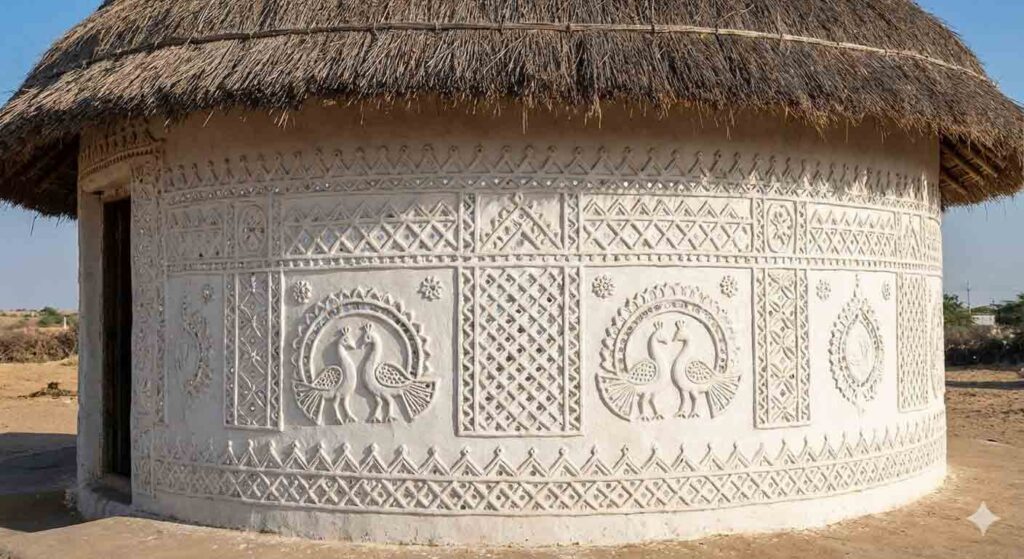
In the vast, salt-crusted landscape of the Rann of Kutch, beauty isn’t found in lush forests, but in the intricate patterns on the walls of a Bhunga (traditional mud hut). This is Lippan Kaam—an ancient mural craft that blends the earthiness of mud with the celestial spark of mirrors.
Whether you call it Mud Art or Lippan Art, this craft is more than just decoration; it is a testament to the resilience and creativity of the Kutchi people.
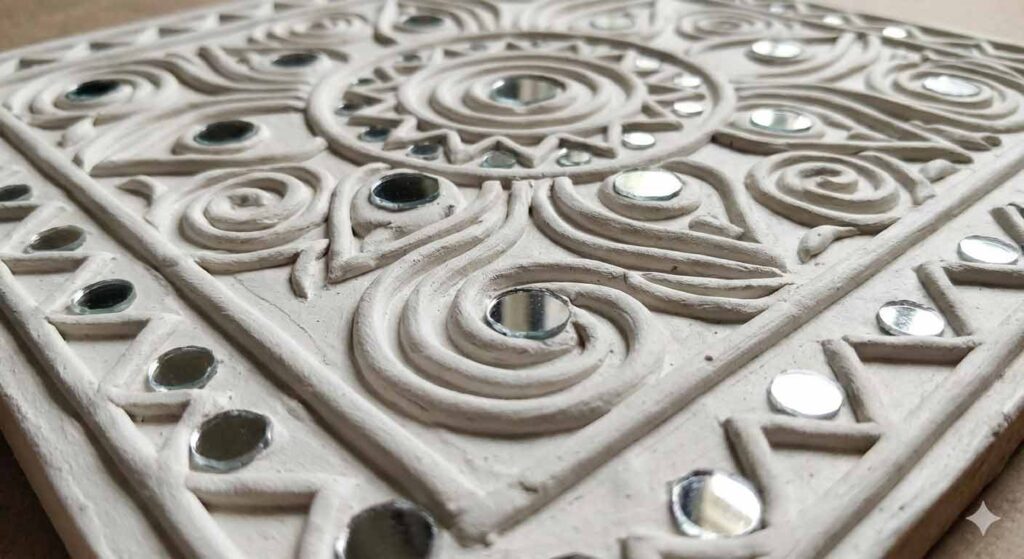
What is Lippan Art?
The word Lippan literally translates to “plastering” in Gujarati. Historically, the Rabari and community used a mixture of wild donkey dung (which acts as a binding agent) and fine clay from the desert to create relief patterns on their walls.
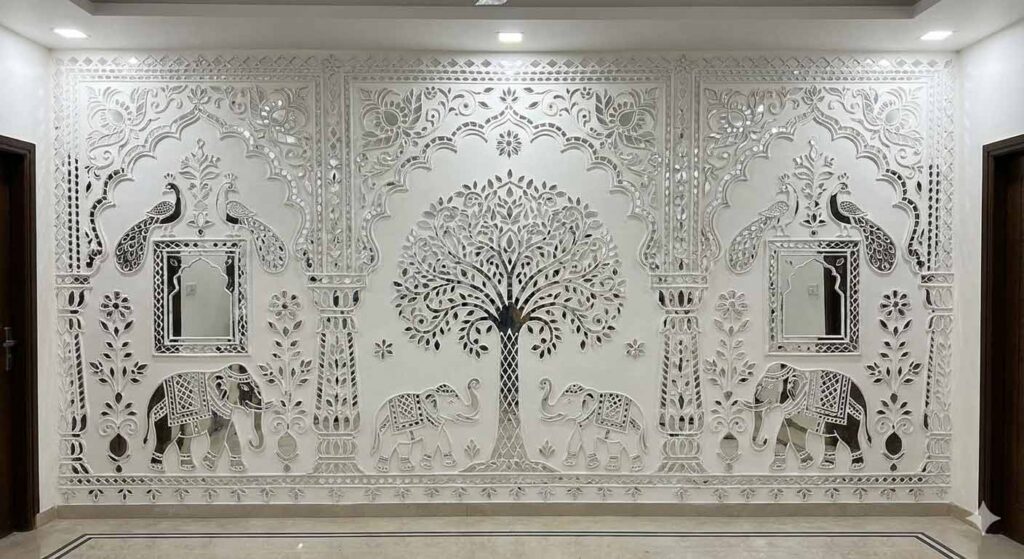
Today, while the materials have evolved for modern homes, the soul remains the same: geometric motifs, floral borders, and the iconic Abhla (mirrors) that catch the light.
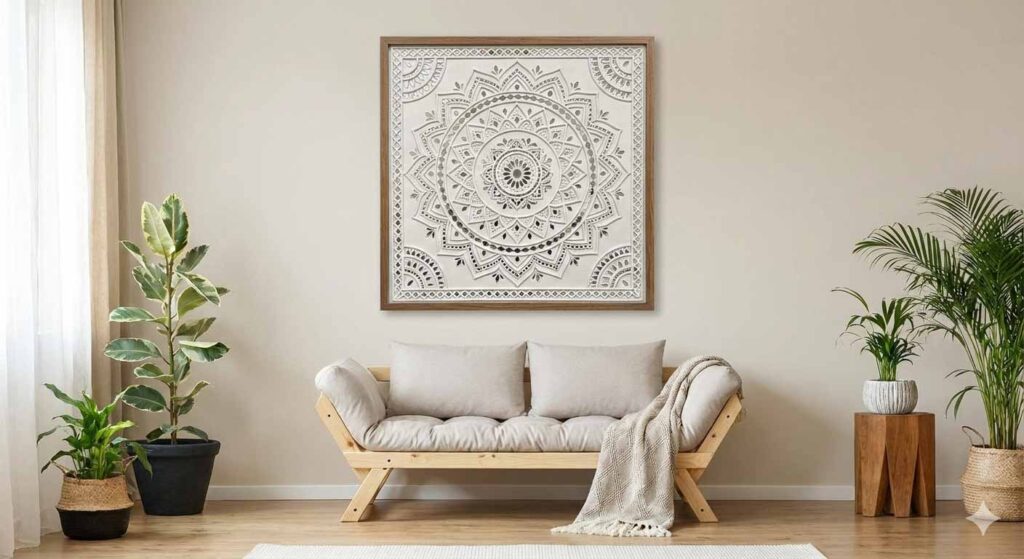
Why Lippan Art is Dominating Modern Decor
Lippan Art has moved from the circular walls of desert huts into luxury urban living rooms. Here’s why it’s trending:
- Eco-Friendly Roots: At its core, it is a sustainable art form using natural materials.
- Luminosity: The mirrors reflect light, making even small, dark rooms feel spacious and bright.
- Neutral Elegance: The traditional white-on-white palette fits perfectly with minimalist, bohemian, or contemporary interior design.
- Handcrafted Authenticity: In a world of mass-produced plastic, a hand-molded Lippan piece tells a story of human touch.
Symbolism in the Patterns
Every line in a Lippan mural has a meaning. When you look closely at a piece from Kutch, you’ll see:
- Peacocks and Camels: Representing the local wildlife and the rhythm of desert life.
- The Tree of Life: A symbol of growth, family, and connection to the earth.
- Mandala Motifs: Circular patterns that represent the universe and spiritual balance.
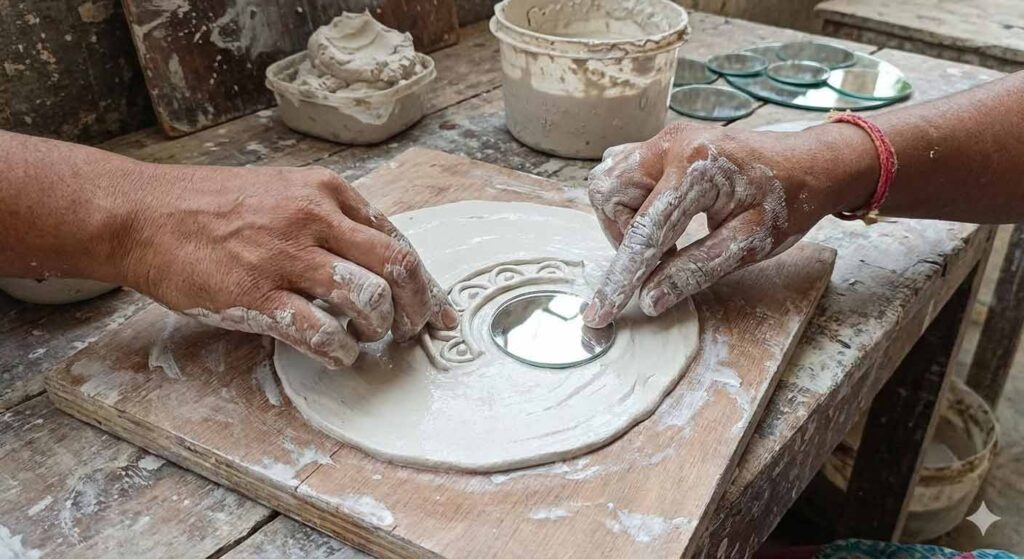
Caring for Your Lippan Art
Since authentic Lippan is made of clay, it requires gentle handling. If you own a piece from craftcentres and kutchhandicraft, remember:
- Dusting: Use a soft, dry brush or a microfiber cloth. Never use water directly on the clay.
- Mirror Cleaning: A cotton swab with a tiny drop of glass cleaner can make those mirrors pop again.
Bringing the Rann to Your Home
Lippan Art isn’t just a product; it’s a piece of Gujarat’s heritage. From large-scale wall installations to small framed panels, adding this “Mud Art” to your space brings a sense of calm and tradition that few other crafts can match.
Explore our curated collection of authentic Lippan pieces, handcrafted by artisans in the heart of Kutch