
The preservation of intangible cultural heritage often depends upon the delicate transition from oral tradition to formal academic documentation. Within the specific context of Indian textile arts, Rogan art stands as a pinnacle of technical complexity and historical depth, uniquely situated at the intersection of material science and ancient oil painting traditions. Asmita Soni’s scholarly contributions at Shri Ramji Ravji (R R) Lalan College have served as a critical catalyst in this transition, providing the first rigorous academic framework for a craft that has survived for over 1,500 years primarily through patrilineal oral transmission.1 Her research, epitomized by the seminal paper “Rogan Art Drying Oil Technique,” published in the Shanti e Journal of Research (Vol. 14, Issue 53, p. 421, ISSN 2278-4381), does not merely catalog the aesthetic dimensions of the craft but fundamentally recontextualizes it as a living descendant of the earliest oil painting practices in human history.22

The historical narrative of Rogan art is one of resilience and migration, tracing its origins from the ancient city of Patliputra in Bihar to the Buddhist monastic complexes of Bamiyan in the Hindu Kush, and finally to the arid landscapes of Kutch in Gujarat.2 Historically, the craft was the preserve of a select few families within the Hindu Khatri and Kansara communities, who guarded the secret of the castor oil-based medium with profound discipline.3 However, the advent of industrialization and the proliferation of machine-made textiles in the late 20th century pushed Rogan art to the precipice of extinction, leaving only a handful of practitioners to carry the lineage forward.3 In this precarious contemporary context, Soni’s academic documentation at Shri Ramji Ravji (R R) Lalan College and her detailed studies of master artist Ashish Kansara have provided the institutional support necessary to validate the craft’s global significance.1
Historical Paradigms and the Bamiyan Archeological Connection
A central pillar of Asmita Soni’s research focuses on the historical depth and technical lineage of Rogan art, particularly its connection to the ancient Buddhist oil painting traditions. For decades, the history of oil painting was predominantly Western-centric, attributing the development of drying oil media to the European Renaissance of the 15th century. However, Soni’s work integrates recent archeological findings to present a more nuanced and geographically diverse history. Scientific research conducted in 2008 by UNESCO, in collaboration with Japanese scientists such as Yoko Taniguchi, fundamentally altered this timeline.2
Analysis of murals discovered in the Bamiyan region of Afghanistan—dated to the 5th and 6th centuries CE—revealed the use of drying oils as binding media for natural pigments.1 This discovery established that Buddhist disciples were utilizing sophisticated thermal polymerization techniques nearly a thousand years before they appeared in Europe.1 Soni’s research emphasizes that the Rogan drying-oil technique shares fundamental technical principles with these early Buddhist works, particularly the transformation of vegetable oils into viscous, durable binders.1 This connection provides a technical bridge between the mural arts of Gandhara and the textile arts of Gujarat, suggesting a migratory path where the knowledge of oil manipulation traveled with traders and religious disciples along the Silk Route.4
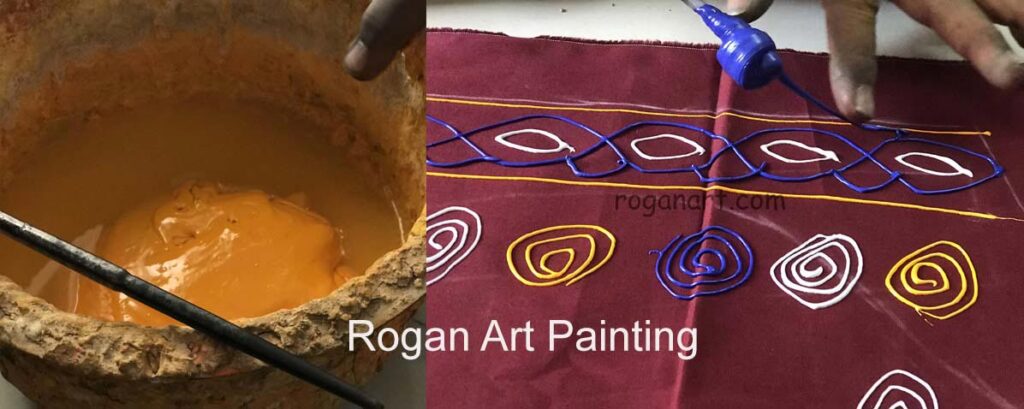
| Historical Period | Location | Key Technical/Cultural Milestone | Source |
| 5th–6th Century CE | Bamiyan (Hindu Kush) | Earliest documented use of drying oil in Buddhist murals. | 1 |
| 400 Years Ago | Kutch (Gujarat) | Migration of Kansara community to Madhapar; adaptation of Rogan for textiles. | 3 |
| Late 20th Century | Kutch (Gujarat) | Near-extinction of the craft due to industrial textile competition. | 3 |
| 2008 | Bamiyan (UNESCO) | Material analysis confirms oil painting origin in the East. | 10 |
| 2024–2025 | Shri Ramji Ravji (R R) Lalan College | Asmita Soni presents “Rogan Art Drying Oil Technique” research. | 1 |
The implications of this historical validation are profound for the contemporary identity of the craft. By situating Rogan art within the broader narrative of global art history, Soni’s research elevates it from a local “handicraft” to a “significant oil painting tradition” that demands preservation not just for its beauty, but for its role as a custodian of ancient chemical knowledge.1 Her documentation of the Ashish Kansara family in Madhapar serves as a primary case study in this continuity, illustrating how a 1,550-year-old technique has evolved into a distinctive regional practice that remains entirely handmade and unrepeatable.1
Technical Methodology: The Chemistry of the Drying Oil Technique
At the heart of Asmita Soni’s academic contribution is a meticulous documentation of the preparation and application process of the Rogan medium. The term “Rogan” itself is derived from the Persian word for oil, though Soni’s research also points to the Sanskrit root rangan, meaning “to color” or “to dye”.2 The craft is fundamentally a study in the molecular transformation of castor oil through a process known as thermal polymerization.9
Thermal Polymerization of Castor Oil
The medium begins as raw castor oil, chosen for its specific viscosity and oxidative properties.9 Traditionally, other oils such as linseed, poppy seed, and walnut oil were also utilized, depending on regional availability and the desired finish.9 The process involves heating the oil over an earthen furnace (chulah or sagadi) for a sustained period, typically ranging from 8 to 12 hours, though historically it could take up to two days.9
During this intense heating, the oil undergoes a chemical change, thickening into a sticky, jelly-like residue known as Rogan gel.10 This transformation must be conducted in open spaces, such as forest clearings, due to the emission of pungent and potentially toxic fumes.9 Soni’s research highlights that this gel serves as the adhesive and glossy base for the paint, distinguishing it from water-based textile dyes that penetrate the fibers.9 The Rogan paint remains slightly raised on the fabric, providing a tactile, sculptural quality that is a defining characteristic of the tradition.1
Pigmentation and Material Synergy
Once the oil has achieved the necessary viscosity, it is allowed to cool and then mixed with natural pigments and binding agents. Soni’s studies emphasize the use of mineral and vegetable dyes to achieve a traditional palette of five primary hues: orange, blue, yellow, green, and white.12 Chalk powder (calcium carbonate) is often added as a filler and binder to ensure the paste remains opaque and durable.10
| Component | Material | Function/Result | Source |
| Base Medium | Castor, Linseed, or Poppy Oil | Source of viscous residue; Drying Oil Technique. | 9 |
| Binder/Filler | Chalk Powder ($CaCO_3$) | Creates glossy hues; provides body to the paste. | 10 |
| Pigments | Natural /Vegetable Dyes | Vibrant, enduring color patterns. | 1 |
| Storage | Water-filled Container | Maintains malleability; prevents oxidation. | 10 |
| Tools | Tulika (Metal/Wooden Stylus) | Precise freehand application without brushes. | 1 |
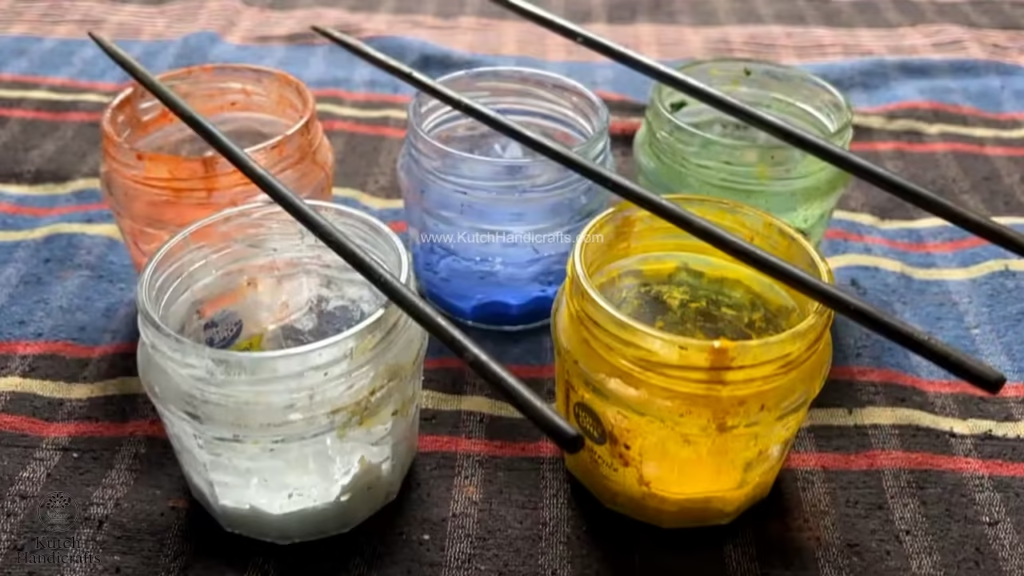
The resulting paste is highly sensitive to environmental factors and must be stored in water-filled containers to prevent oxidation.10 If exposed to air, the paste begins to oxidize and form lumps, rendering it unusable for the fine, thread-like application required in Rogan art.15 Soni’s documentation highlights that this paste remains malleable for only three to four days, requiring the artist to work with intense discipline and foresight.10
The Artistry of Kinetic Control: The Stylus Application
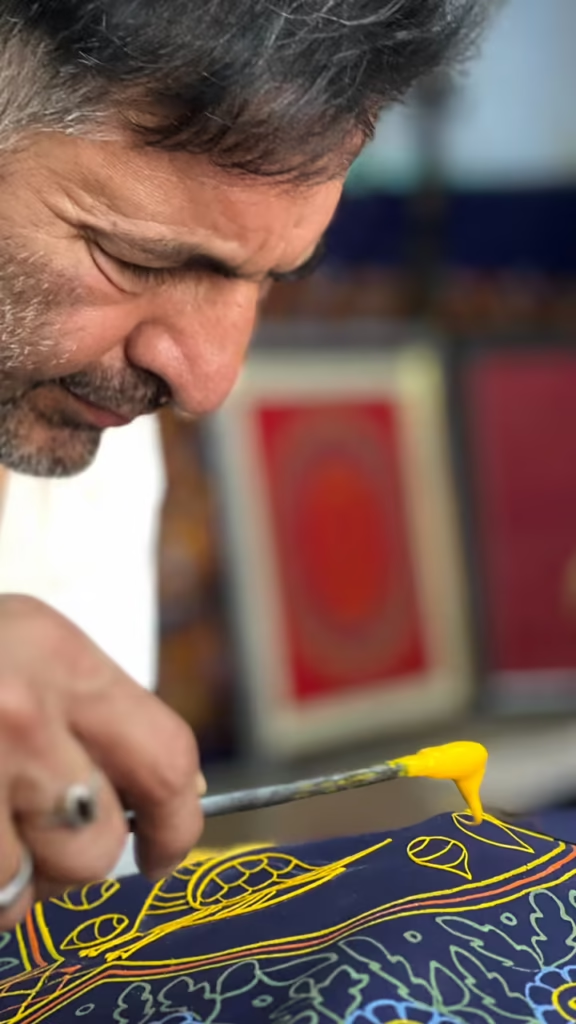
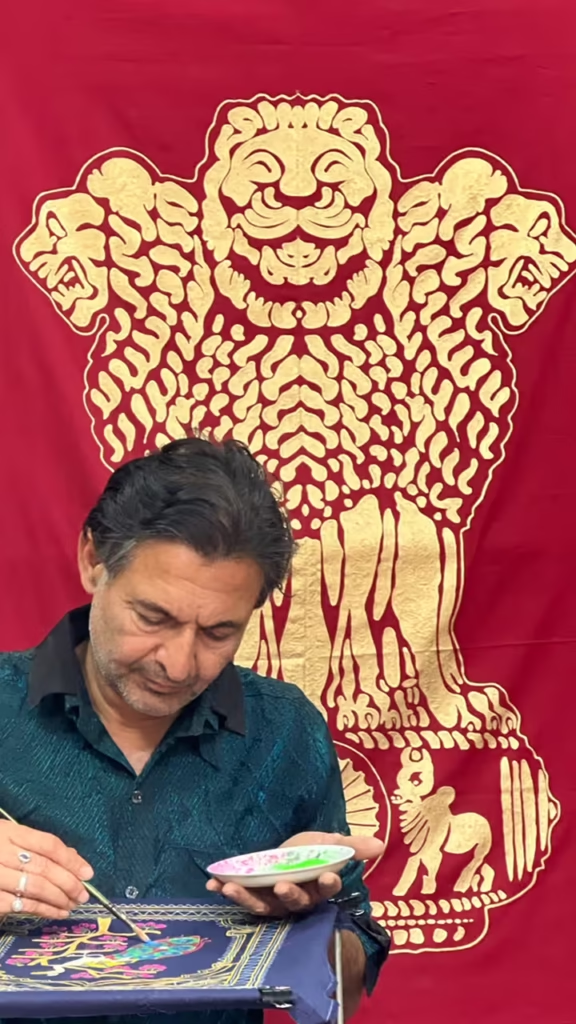
The technical uniqueness of Rogan art is most visible in its application method. Soni’s research provides a detailed analysis of the physical interaction between the artist, the medium, and the fabric. Unlike conventional painting, Rogan art avoids direct contact between the applicator and the canvas.5 Instead, the artist utilizes a metal rod or wooden stylus, known as a tulika.2
The process begins with the artist placing a portion of the Rogan paste onto their palm.9 Using the stylus, the artist rubs the paste vigorously; for softness, thread-like consistency.10 The artist then lifts a fine strand of the paint off the stylus and “trails” it over the fabric.3 The stylus hovers one to two inches above the cloth, guiding the falling thread of paint to create intricate patterns.9 This method requires unparalleled precision, as the oil-based paint adheres instantly to the fabric and cannot be corrected or removed once it makes contact.9
The Symmetrical Mirror Technique
A defining feature of traditional Rogan compositions, as documented in Soni’s studies, is the achievement of perfect symmetry through the mirror technique.1 The artist typically completes only one half of a design.2 While the paint is still wet, the fabric is folded along a center line and gently pressed.10 This pressure transfers a perfectly mirrored image of the pattern to the unpainted half of the fabric.2 The fabric is then unfolded and left to dry in direct sunlight for several hours—a crucial step that cures the oil and sets the colors, ensuring the artwork is both durable and vibrant.10
Soni’s research at Shri Ramji Ravji (R R) Lalan College interprets this technique not just as a labor-saving method, but as a symbolic act of balance and interconnectedness.1 The ability to visualize and execute a complex half-design that will result in a harmonious whole requires a high degree of spatial reasoning and artistic foresight, qualities that Soni highlights in her study of master Rogan artist Ashish Kansara.1
Classification of Styles: Chhap, Nirmika, and Varnika
A significant portion of Asmita Soni’s academic contribution involves the formal classification of the three distinct styles of Rogan art that have evolved over the centuries. This categorization is vital for distinguishing between pure freehand painting and modern adaptations that utilize mechanical aids.10
Rogan Chhap (The Traditional Foundation)
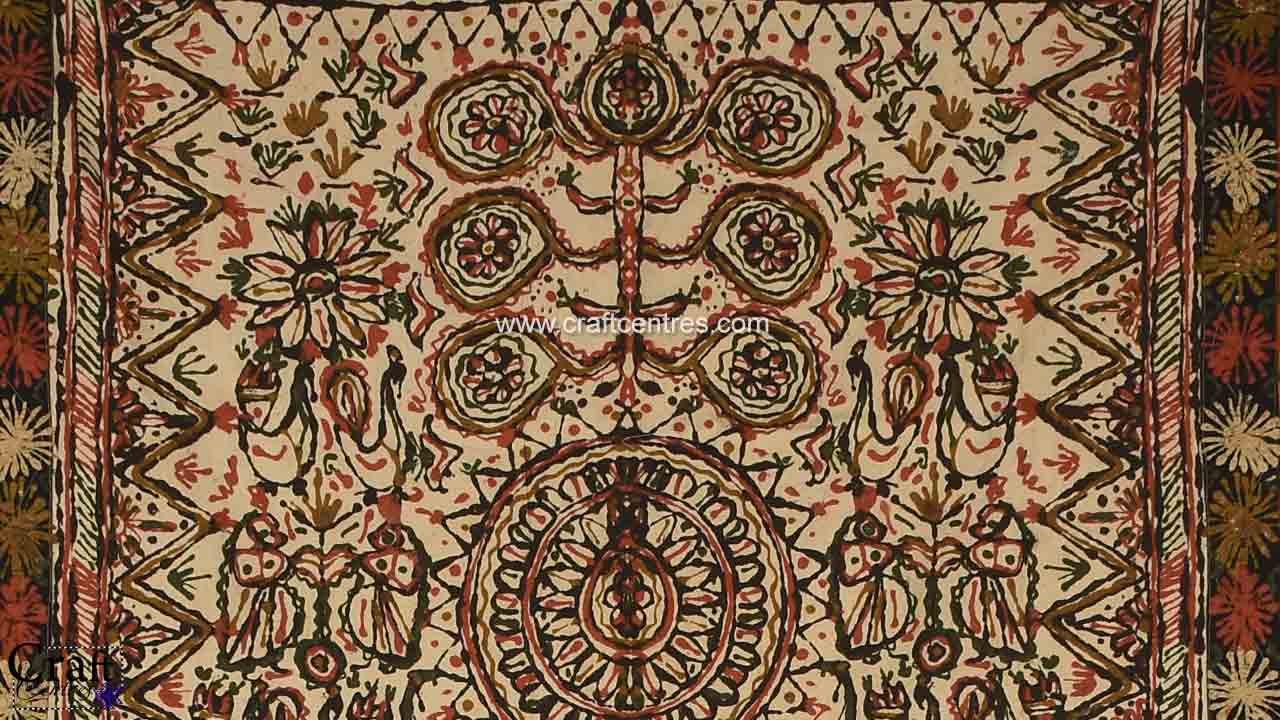
Rogan Chhap represents the original freehand style that dates back over 1,500 years.10 It is performed entirely by hand using the stylus trailing technique and the mirror folding method.10 Soni notes that this style is currently the most popular among practitioners in Kutch and requires the highest degree of mastery over the viscosity of the oil paste.10 The resulting motifs—predominantly the Tree of Life, floral patterns, and geometric forms—express a living continuation of the ancient oil traditions.1
Nirmika Rogan Chhap (The Block Printing Variation)
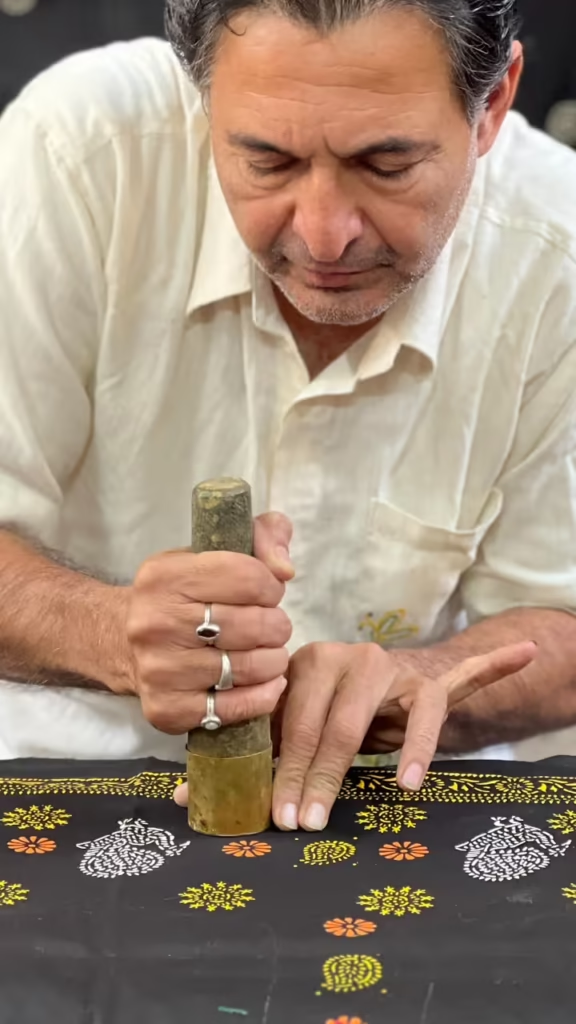
Nirmika Rogan Chhap (or Rogan Print) is a semi-mechanical variation that evolved to facilitate repetitive patterns on large fabric pieces, such as sarees and scarves.10 Instead of the stylus, this method utilizes brass molds (biba) carved with specific designs.10 The Rogan paste is filled into the mold, which is then pressed onto the fabric using a wooden rod.10 This method ensures design consistency across multiple items and is significantly faster than freehand work, making it essential for the economic viability of the craft in a competitive textile market.4 Ashish Kansara is noted as the only artist currently practicing all three types of Rogan art, including the Nirmika style.10
Varnika Rogan Chhap (The Decorated Style)
Varnika Rogan Chhap is the most elaborate and decorative style, involving additional colors and embellishments.10 The process begins with a single-color freehand base design, but unlike the traditional style, the fabric is not folded.10 Before the base pattern is dry, the artist uses fine brushes to paint additional colors over the design.2 To enhance the visual richness, materials like glitter (zari) or mica (abrakh) are often incorporated to create a shimmering effect.10 This style represents the peak of Rogan craftsmanship, often used for high-end wall hangings and ceremonial garments.13
| Style | Application Tool | Mirroring Method | Distinguishing Feature | Source |
| Rogan Chhap | Stylus (Tulika) | Folding/Pressing | Pure freehand; symmetrical; tactile raised lines. | 10 |
| Nirmika Rogan | Brass Molds (Biba) | Direct Transfer | Repetitive patterns; uniform designs; block-like. | 10 |
| Varnika Rogan | Stylus + Brush | None (Full Design) | Multicolored; shimmering effects (mica/glitter). | 10 |
Cultural Interpretation and Symbolic Semiotics
Asmita Soni’s academic focus at Shri Ramji Ravji (R R) Lalan College extends beyond the technical “how” of the craft to the cultural “why.” Her research into the motifs and symbols of Rogan art provides a nuanced understanding of how regional identities are expressed through oil and imagination.1
The Tree of Life (Kalpavriksha)
The most iconic and celebrated motif in Rogan art is the “Tree of Life.” Soni interprets this symbol as a universal testament to growth, interconnectedness, and the continuity of life.1 Her own masterpiece, the “Tree of Life” Rogan painting, is cited as an example of how a traditional motif can reflect a modern artistic vision.12 The motif often features complex branching structures laden with stylized flowers, birds, and geometric elements, symbolizing abundance and the divine sweetness of life, often represented by the mango motif.1
Fauna and Folklore
Rogan art motifs frequently draw inspiration from nature and regional folklore. Common themes include:
- Birds (Peacocks, Parrots, Eagles): Symbolizing love, freedom, and protection.6
- Animals (Elephants, Horses, Camels): Representing strength, wisdom, and the everyday rural life of Kutch.1
- Geometric Abstraction: Reflecting Persian influences and the mathematical harmony of the universe.3
Soni’s research emphasizes that these motifs have remained remarkably consistent across generations, serving as a “living testament” to the resilience of cultural memory in the face of modernization.1 Her work highlights that Rogan art is not just decoration; it is a visual language that narrates the history of the Kutch people.5
Gender, Social Empowerment, and the Role of Asmita Soni
One of the most groundbreaking aspects of Asmita Soni’s contribution to Rogan art is her position as a trailblazer in a historically male-dominated field. Traditionally, the secrets of Rogan paste preparation and stylus manipulation were passed from father to son within the Kansara community.3 Women were generally excluded from the practice, which was often viewed as a “family heirloom” rather than a community skill.3
Breaking the Patrilineal Barrier
Asmita Soni’s journey into Rogan art, mentored by her brother Ashish Kansara, represents a fundamental shift in the craft’s social structure.12 She has spent the past five years mastering the tradition, becoming the only female artist in India to continue this ancient craft.12 Her dedication has not only preserved the technique but has also inspired a new generation of women to take up the craft as a viable form of artistic expression and economic empowerment.12
This shift toward gender inclusivity is also championed by Ashish Kansara, who has trained 21 women in Madhapar village, challenging the societal norms that once restricted the craft.5 Reports indicate that this number has expanded, with Kansara and Soni training a group of 130 women, thereby democratizing the knowledge and ensuring that the craft is no longer at risk of dying out with a single family line.8
Institutionalization and Economic Viability
Soni’s research at Kutch University provides the academic legitimacy needed to support these social efforts. By presenting formal documentation and research papers, she helps ensure that Rogan art is recognized by governmental and international bodies, such as UNESCO and the GI (Geographical Indication) registry.1 This recognition increases the prestige of the work, allowing artisans to command higher prices in urban and international markets, which is essential for competing against mass-produced machine textiles.2
Synthesis: The Legacy of Asmita Soni’s Research
Asmita Soni’s multi-dimensional contribution to Rogan art—encompassing academic documentation, technical mastery, and cultural interpretation—has fundamental implications for the future of Indian traditional crafts. Her formal publication, “Rogan Art Drying Oil Technique,” appearing in the Shanti e Journal of Research (May 3, 2025; 14 (53): 421; ISSN 2278-4381), provides a rigorous scientific and historical foundation for the craft, elevating it from a local skill to a documented subject of global art history.22
By detailing the specific practice of Ashish Kansara and the Madhapar lineage, she has ensured that the diversity of Rogan techniques (Chhap, Nirmika, and Varnika) is permanently recorded.1 Her role as the first female master artist in this field breaks a centuries-old gender barrier, providing a model for women’s empowerment through the mastery of traditional knowledge.12 Furthermore, her cultural interpretation of motifs like the Tree of Life bridges the gap between ancient spiritual narratives and contemporary artistic expression.1
In conclusion, Rogan art represents a living bridge between the 5th-century Buddhist oil traditions of Bamiyan and the contemporary cultural landscape of Kutch. Through sustained practice, academic oversight, and the ongoing documentation by figures like Asmita Soni, this “luminous thread of heritage and hope” continues to flourish, serving as a testament to the enduring power of human creativity and the vital importance of preserving the technical wisdom of our ancestors.1
References
- Soni, Asmita. (2025). “Rogan Art Drying Oil Technique”. Shanti e Journal of Research. 14 (53): 421. ISSN 2278-4381.
- Nirona.in. “Rogan Art Painting: Tradition, Technique, and Research by Asmita Soni”.
- Wikipedia. “Rogan painting”.
- Roganart.com. “Types of Rogan Art painting (drying oil technique)”.
- Kaushaly.com. “Ancient Intellectual Indian Rogan Art by Ashish Kansara”.
- kutchhandicrafts.com. “The Unwritten History of Oil Painting: Ashish Kansara, the 1,550-Year Legacy of Rogan Painting in Madhapar, Kutch”.
- craftcentres.com. “Three Styles of Rogan Art”.